IVC Filter Placement in Hyderabad — Blood Clot Prevention at AIG Hospitals, Gachibowli
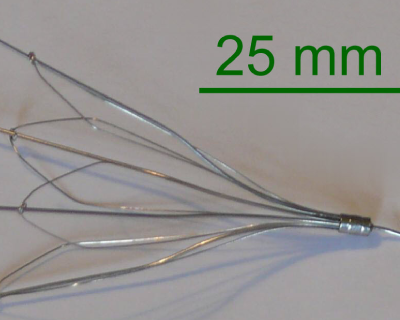
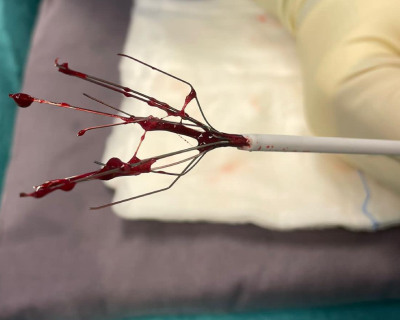
An IVC filter (inferior vena cava filter) is a small, umbrella-shaped device placed inside the body's largest vein to catch blood clot fragments before they can travel to the lungs and cause a pulmonary embolism. It is used specifically for patients with deep vein thrombosis (DVT) or pulmonary embolism who cannot safely take blood-thinning medication, or in whom blood thinners alone have failed to prevent clot progression. Dr. Bhishma Chowdary places both retrievable and permanent IVC filters at AIG Hospitals, Gachibowli, Hyderabad.
At a Glance
| Procedure Type | Percutaneous vascular device placement — minimally invasive |
| Purpose | Mechanical prevention of pulmonary embolism when anticoagulation is unsuitable |
| Device Types | Retrievable filter (removable within weeks to months), Permanent filter (long-term) |
| Access | Femoral vein or internal jugular vein in the neck |
| Anaesthesia | Local anaesthesia. The patient remains awake throughout the procedure. |
| Duration | 20 to 30 minutes |
| Hospital Stay | Same-day discharge or an overnight stay, depending on the patient's condition. |
| Performed By | Dr. Bhishma Chowdary, DM Cardiology, FSCAI, AIG Hospitals, Hyderabad |
| Appointment | +91-9000352998 |
What is an IVC filter and how does it work?
The inferior vena cava (IVC) is the large vein that carries deoxygenated blood from the lower body back to the heart. When a blood clot forms in the deep veins of the leg or pelvis (deep vein thrombosis) and a fragment breaks free, it travels through the venous system, through the IVC, into the right side of the heart, and onward into the pulmonary arteries — where it can cause a pulmonary embolism, a potentially fatal blockage of blood flow to the lungs. An IVC filter is a small, cone or umbrella-shaped metal device deployed inside the IVC, positioned to allow normal blood flow to pass through while its struts catch and trap larger clot fragments, preventing them from reaching the lungs. It is a mechanical, physical barrier — not a medication — and does not treat or dissolve existing clots; anticoagulation remains the primary treatment for DVT whenever it can safely be used.