
Pericardiocentesis in Hyderabad — Draining Fluid Around the Heart at AIG Hospitals, Gachibowli
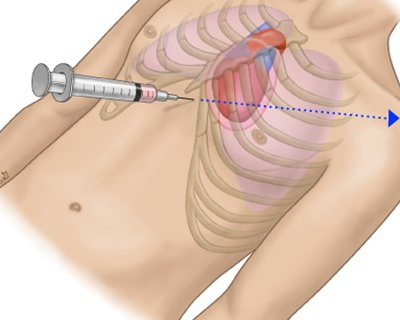
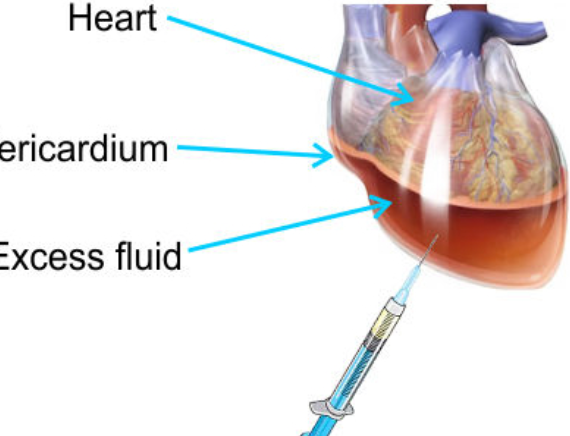
Pericardiocentesis is a procedure to drain excess fluid that has accumulated in the pericardial sac — the thin fibrous membrane surrounding the heart. When this fluid builds up faster than the body can absorb it, it compresses the heart and restricts its ability to fill with blood between beats, a potentially life-threatening condition called cardiac tamponade. Dr. Bhishma Chowdary performs both emergency and planned pericardiocentesis at AIG Hospitals, Gachibowli, Hyderabad, under real-time echocardiographic guidance for precision and safety.
At a Glance
| Procedure Type | Percutaneous drainage — minimally invasive, needle-based |
| Condition Treated | Pericardial effusion, cardiac tamponade |
| Guidance | Real-time echocardiographic guidance (echo-guided pericardiocentesis) |
| Anaesthesia | Local anaesthesia. The patient remains awake throughout the procedure. |
| Duration | 20 to 40 minutes |
| Setting | Performed as an emergency for cardiac tamponade or as a planned procedure for a large, stable pericardial effusion. |
| Hospital Stay | 24 to 72 hours, depending on the underlying cause and the duration of drain placement. |
| Performed By | Dr. Bhishma Chowdary, DM Cardiology, FSCAI, AIG Hospitals, Hyderabad |
| Emergency Line | +91-9000352998 |
Understanding pericardial effusion and cardiac tamponade
The pericardium normally contains a small amount of lubricating fluid — around 15 to 50 millilitres — allowing the heart to beat smoothly within the chest. A pericardial effusion is an abnormal accumulation of additional fluid, which can result from infection, inflammation (pericarditis), malignancy, kidney failure, autoimmune disease, trauma, or as a complication of cardiac procedures or recent heart attack. The clinical significance of an effusion depends less on the total volume of fluid and more on how quickly it accumulates. A large effusion that develops slowly over weeks allows the pericardium to stretch and can be surprisingly well tolerated. In contrast, even a relatively small volume of fluid accumulating rapidly — for example, from bleeding after a cardiac procedure — can cause tamponade because the pericardium has no time to stretch and accommodate it.